Running the Heroine's Journey Retreat: Five Lessons for Hosting Any Gathering
We rounded the corner and stopped dead. Workers were hauling folding chairs into “our” grove, setting up the aisle for an au naturel wedding.
I burst out laughing. Yeah… the universe really wanted me to learn a lesson.
My co-leader Irene and I been up early the day before scouting the coastline for an outdoor workshop space and solo hike. We’d walked for miles scoping out multiple sites and now were two strong-willed women squabbling over the perfect space for our retreat participants. I wanted that grove. Irene had other things that mattered to her. We settled on a plan satisfying both our inner control freaks. And now… Mendocino had other ideas.
Six years into leading this retreat and the lessons keep on coming from all directions. Have a plan and be in flow. So we found a spot on the bluff instead. It had the ocean on three sides, wind in everyone's hair. It was exactly right and I begrudgingly sent gratitude to the universe.
Irene and I have been running the Heroine's Journey, a four-day women's leadership retreat in Mendocino, California, since 2021. The women have all experienced some type of transformation. We’ve grown enormously as hosts and coaches. Here are my lessons on hosting an intentional gathering from this year’s experiences.
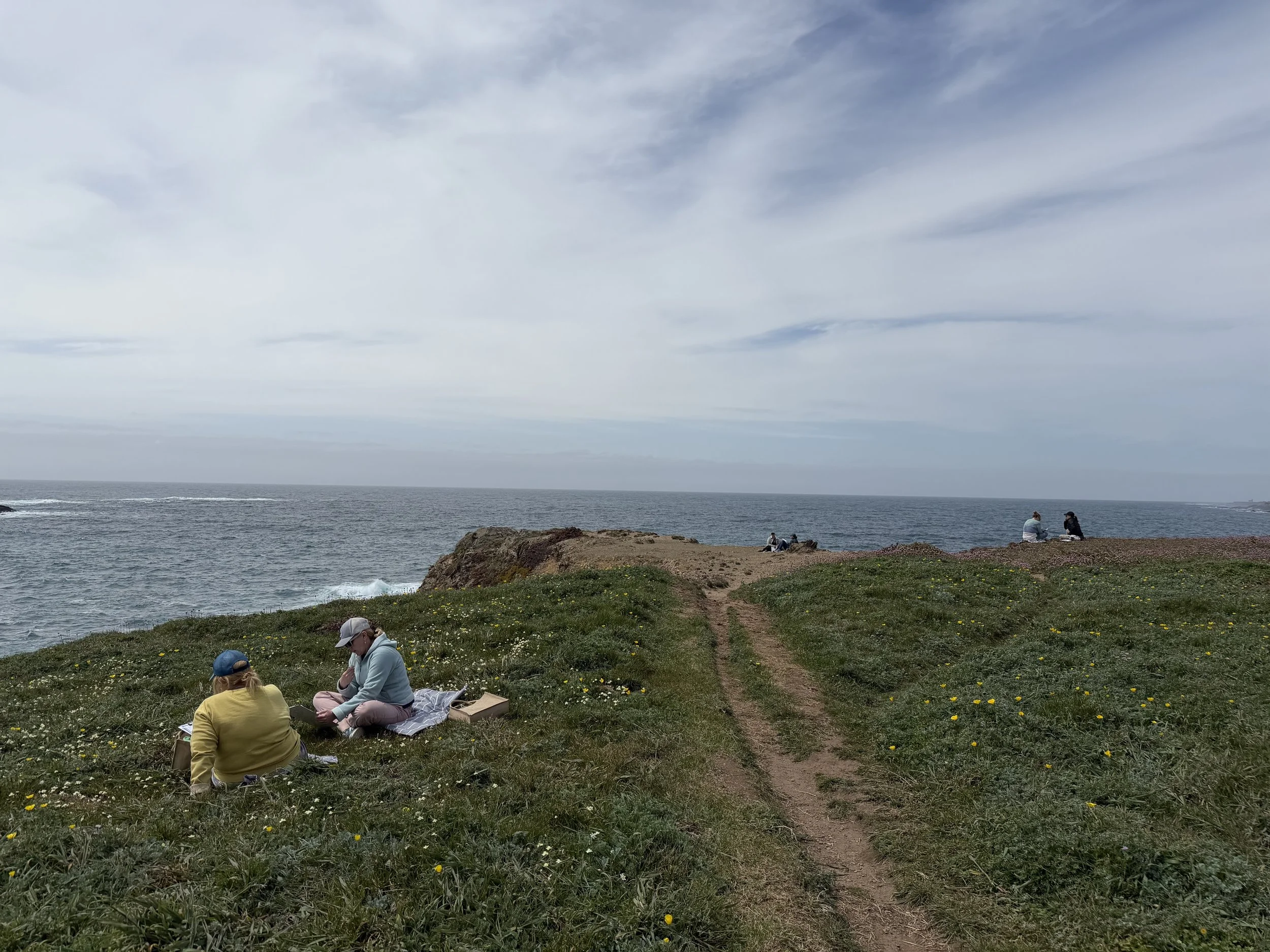
Not the desired grove, but even better
1. Curate for shared needs, not shared backgrounds
I used to worry about who was in the room. Would a founder connect with a nonprofit director? Would a woman in her sixties find common ground with someone in her mid-thirties? Would the woman who opened our circle talking of prayer feel at home with the woman who lived her life allergic to anything remotely spiritual?
The answer, every single year, is yes.
Surface differences don't matter nearly as much as the thing underneath. The women who come aren't a demographic. They're a psychographic: senior in their careers, caring deeply about people, carrying more than they've let on, and willing to do something about it. Everything else varies wildly: age, industry, race, or where they live.
The diversity isn't incidental. It's the point. Put people in a room who share the same deep need but come from completely different worlds, and the conversations go somewhere a homogeneous room never reaches.
Curate for the shared need. Leave everything else wide open.
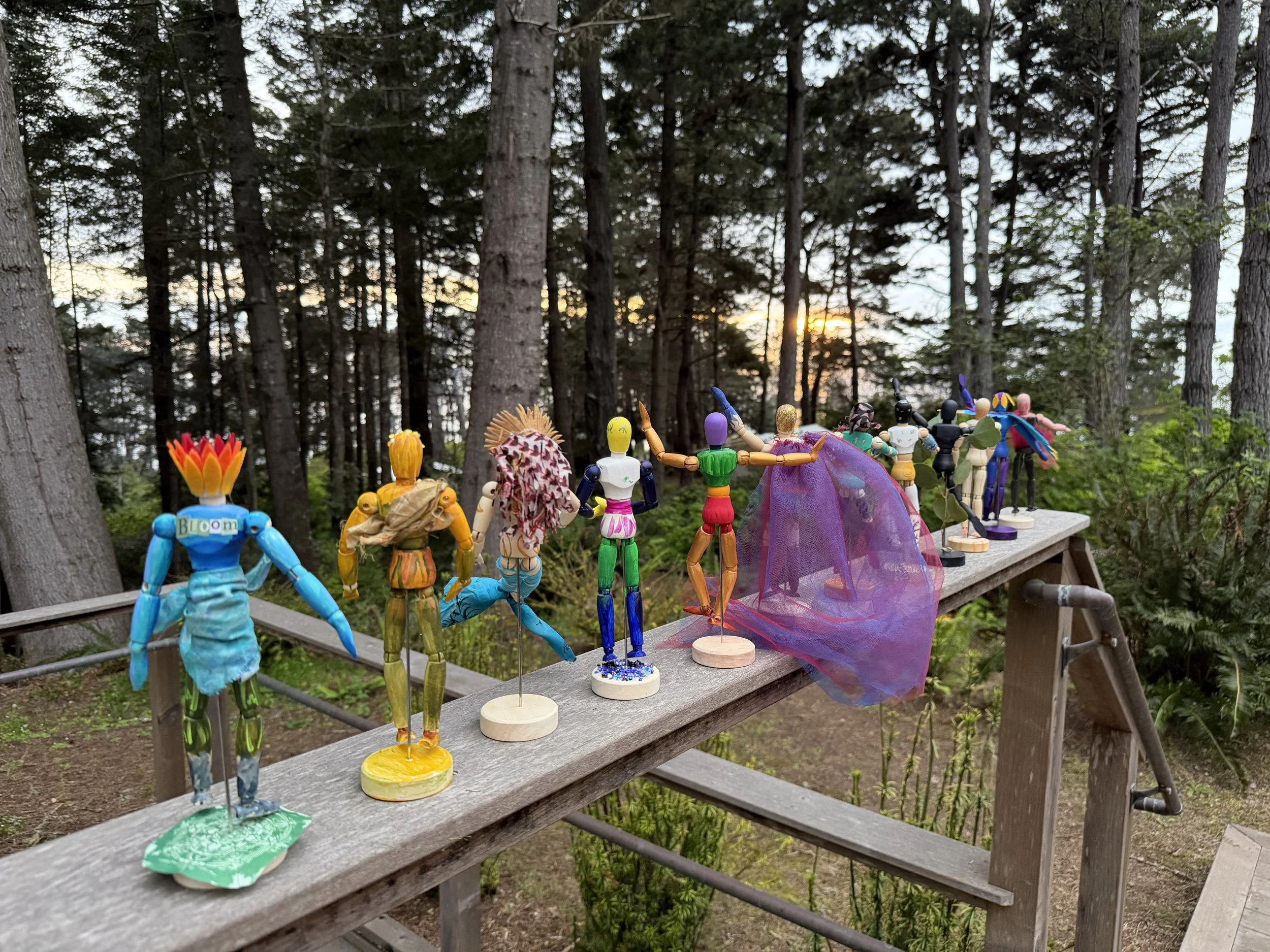
The art activity representing their heroine selves showed such diverse creativity
2. Start with user research
Before every retreat, we get on Zoom with each woman who's coming. We ask what's keeping them up at night, where they’re stuck, and what they most want to shift. No two Heroine's Journeys have been the same. I learned that even more this year with three repeat heroines — women who'd come before, and still showed up with entirely different needs.
This year it was about growing confidence, quieting the inner critic, and finding their own leadership presence after years of performing someone else's version of it.
The intimacy of a small gathering makes this possible. Twelve women means we can actually design for the specific humans in front of us, not a generic version of who we think they are.
This is what designers do before they build anything: talk to the people they're designing for. For this gathering, we don't always give them exactly what they ask for, but the agenda is built from both their spoken and unspoken needs.
3. Belonging before learning
I am someone who learns best at the edge. Challenge, discomfort, the feeling of being slightly in over my head: that's where Irene and I grow. So in our early years, we designed the Heroine's Journey the way we would have wanted to attend it: curriculum packed tight, frameworks stacked on frameworks, every hour accounted for.
It was a lot. Too much.
Before anyone can learn anything, they need to feel comfortable enough to be present. Not still figuring out if they belong. Friday evening is always about setting that foundation, letting the women find common ground, and building enough trust that the real work can begin the next morning.
And then we stay flexible. Reading the room. Shifting what comes next based on where the women actually are, not where we planned for them to be. Some years a session we've run before lands completely differently because this particular group needs something else first.
The structure you arrive with is simply a starting point. Then you follow the energy of the participants.
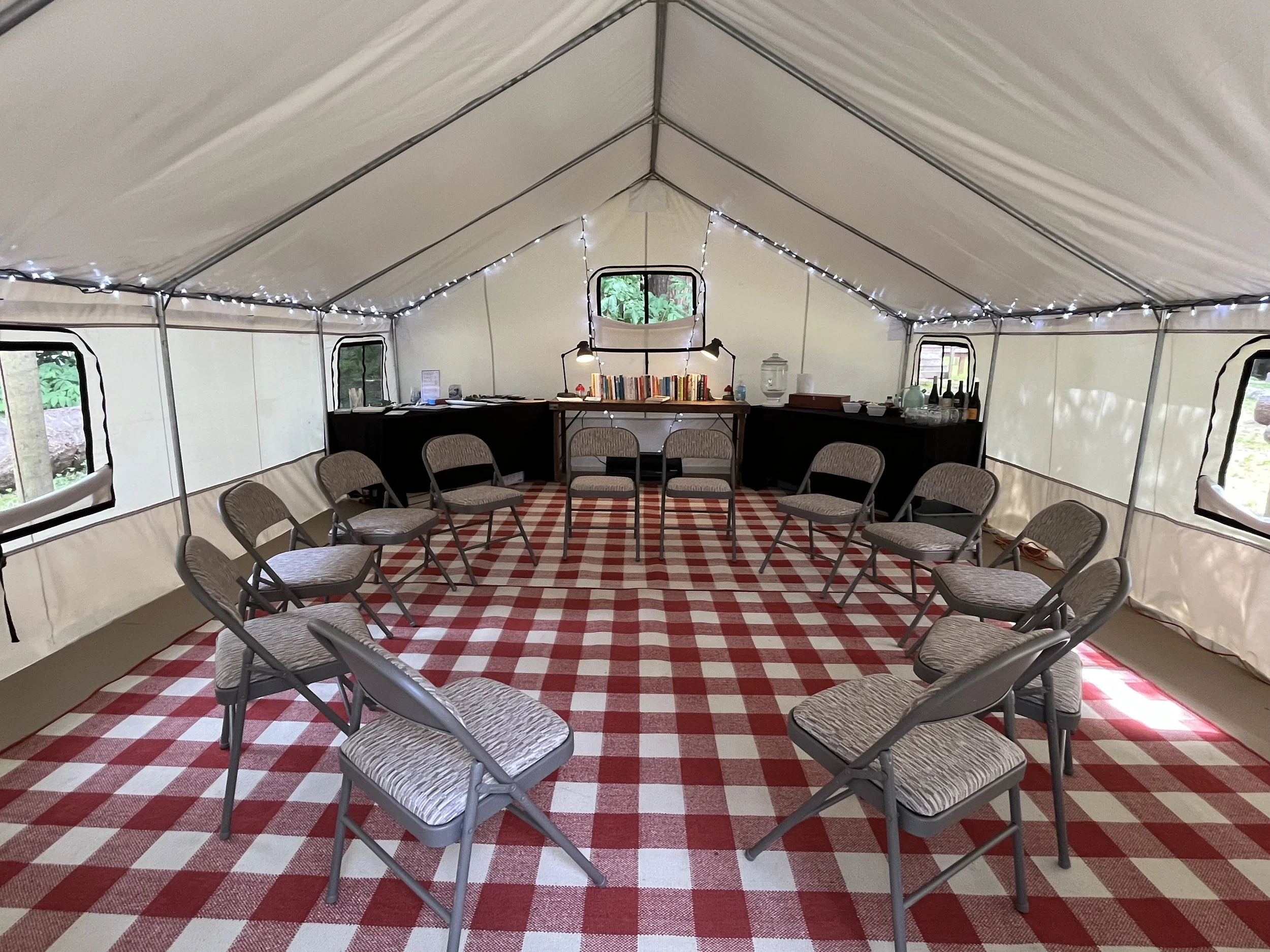
Our opening circle space
4. Plan Tight, Run Loose
Saturday is our anchor day. Skills building, frameworks, deep coaching work, practice: we pack it full and hold it firmly. By afternoon and into Sunday we shift: s'mores, making art, kayaking through the Mendocino sea caves as a way to work with fear and physical limits in real time. The contrast is deliberate.
There's a version of retreat design, and off-site design, and workshop design, where every block is accounted for because empty space feels like a failure of planning. It isn't. The second half isn't unstructured. It's differently structured, designed to reach the body and brain in a completely different way — including solo writing and processing time to absorb what's just happened. Some lessons only land when you've stopped trying to learn them.
Protect your non-negotiables. Let everything else breathe.
5. The host gets to play
Here is something I wish someone had told me before our first retreat: if you spend the entire gathering managing the energy, monitoring the flow, and holding the structure, you will exhaust yourself.
Irene and I made a decision early on that we would both be in it, not just running it. When Irene leads, I participate. When I lead, she participates. We don't position ourselves above the circle as a guru on the hill: we're a part of it
This year we co-led a session together without a predetermined split between us. It was playful and alive in a way that a tightly scripted session rarely is. Releasing control makes it more spontaneous and silly.
It's more fun with two. Running a gathering with a trusted partner means you're never alone in the room. Someone else is thinking alongside you, reading what you're reading, finding the moments you might miss. The energy is different when you're building something together.
I design gatherings I would want to attend. That's the whole premise. Whatever you're creating — a retreat, an off-site, a dinner — build something you would genuinely want to be a participant in. That’s the design principle.
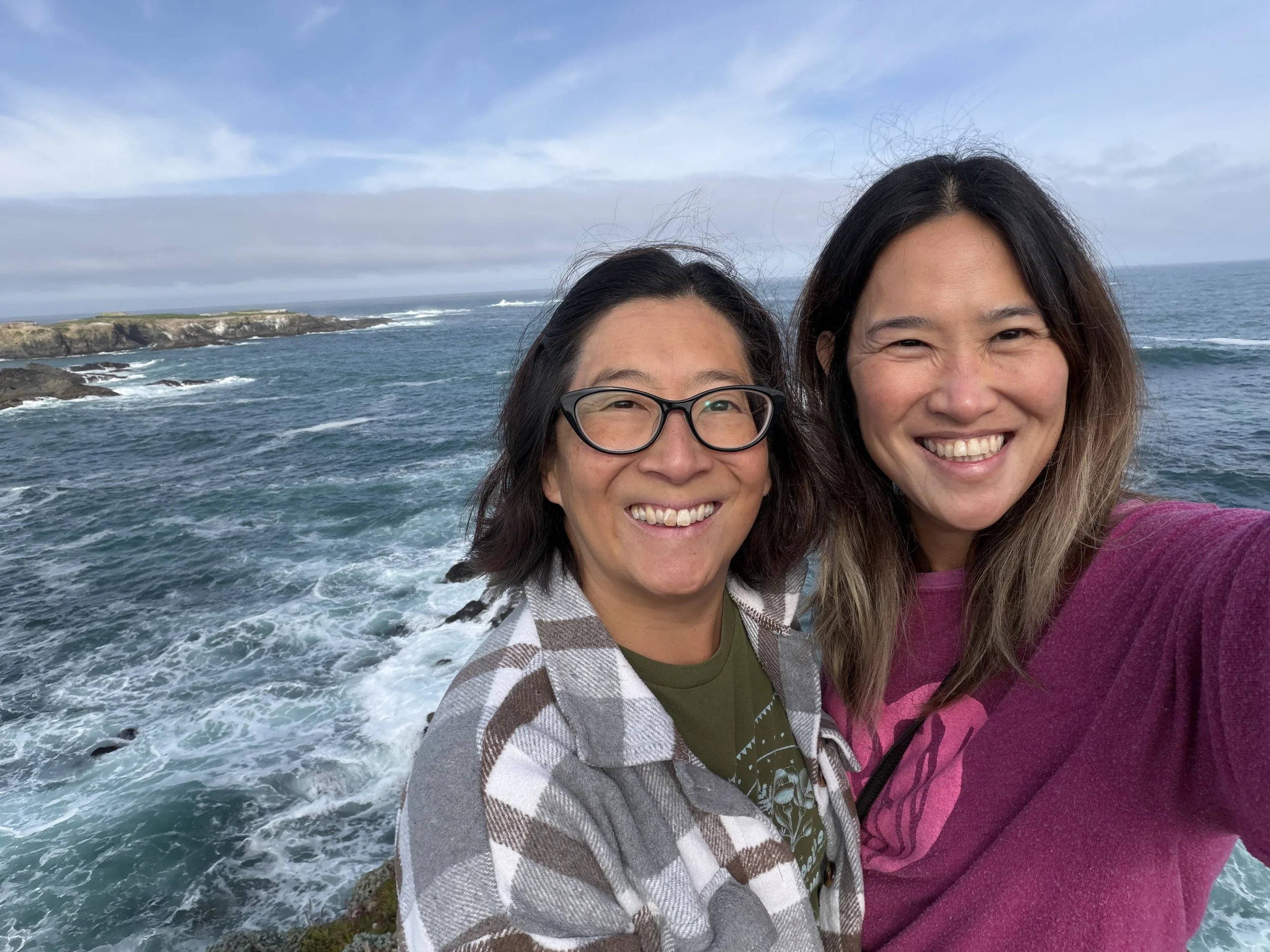
Each year on Monday, after everyone leaves, Irene and I go out to lunch and do a retrospective. And as we do every year, we looked at each other and said: that was the best retreat ever. We've decided that's our criterion: the year we can't say that is the year we stop.
Whatever gathering you're designing, I hope you find your own version of that bar. Know why you're hosting it and what you want from it. Think about what your participants actually need, how the time is structured, and who you do it with. Then show up ready to be surprised.